

Hocus Crocus
A British Guide to the Plants of Imbolc

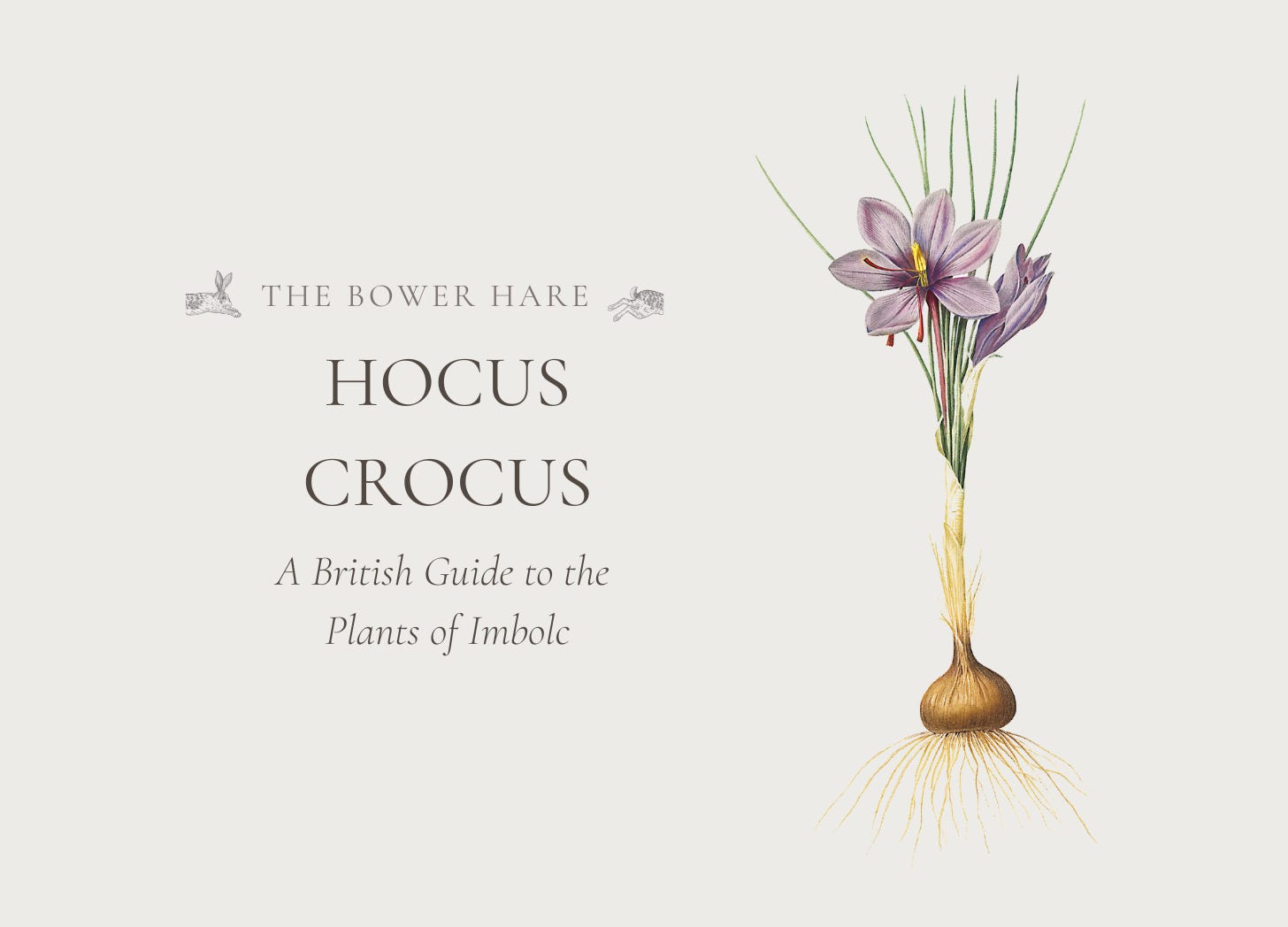
One of the things I love most about these Islands is the huge diversity of plant life, and that there is always something marvelous to look at no matter what spoke on the wheel of the year we find ourselves on. Most would believe January and February to be a time of scarcity, but some of Britain’s most beautiful and interesting plant life is enjoying its time in the limelight, in the wonderful floral parade that we Brits enjoy all year round. Not only are these offerings a beacon of loveliness in an otherwise cold and dreary moment, they are also incredibly important in witchcraft. Let’s take a look at what we can find on the tail end of the Winter months, during Imbolc, the most hopeful of times…
Hellebore:
Otherwise known as ‘The Christmas Rose’, this beautiful plant is synonymous with Winter, cheering up frosty garden beds and hedgerow bottoms throughout the country. They have curvy, deeply lobed leaves and boast flowers in a variety of colours from deep purples to the brightest of lime greens. They can be found in woodland, under the protective cover of hedgerows, and often in gardens, they provide much floral cheer for this dark time of year. Although they have been used medicinally in the past, their use is not encouraged nowadays due to their toxicity. Hellebore has often been associated with protection and finds its use symbolically in baneful magick. I like to decorate my altar with a pot of them during January, a joyful sign that more blooms are to come.
Winter Aconite:
Winter Aconite belongs to the buttercup family and is to be found in woodland areas and deciduous forests. Its bright yellow flowers cut through the frost and the dull tones of the decomposing leaf litter, another cheerful sight to behold in the depths of Winter. Spiritually, Winter Aconite takes its place with many of the Winter-flowering plants as a sign of renewal, hope, and rebirth. This January, I will be including sketches of the flowers in the borders of my spell papers that I use for manifestation, to remind me that Spring is coming, so get a move on with projects.
Horse Chestnut Buds:
One of the earliest budding trees, the Horse Chestnut is always keen to get things growing. Visible from early January, their sticky buds seem enormous compared to any other emerging ones. They have to be large to produce the large leaves that reach their peak in August. Although it is a long time until they produce their magickal conkers, we can use their imagery, or take a twig to use in spells and rituals that promote joy and play... thanks to the game that most British children have played where we bore holes into conkers and then battle them against each other, violent but terrific fun... as most children’s playground games are.
White Dead Nettle:
A good food source for early bees, the flower of this type of nettle is often found in hedgerows, woodland, and disturbed areas. It is part of the mint family so is an interesting plant to forage and add to salads during this time of year. It is packed full of vitamin C which our bodies could do with more of at this time of year. It holds spiritual meaning that’s to its provision for many pollinators, so can be used in abundance and money spells that focus on charitable giving.
Birch Twigs:
Birch is still in its dormancy, though some buds might be spotted if the weather has been a little warmer than usual. Birch is synonymous with crafts, having been traditionally used to make baskets, brooms, and even thatched roofs. With this in mind, Birch is a good choice for drawing-divination sessions, and for making a wonderful birch twig tea… I have a lovely recipe for this, please message me if you’d like it!
Crocus:
These joyful little blooms’ bright colours make it an easily recognisable addition to this list, they are often found growing in clusters in woodland and parks. It is a common misconception that Saffron (the aromatic spice used to flavour and add colour to many dishes) comes from any sort of Crocus, when in truth the majority of varieties of Crocus are toxic and shouldn’t be consumed. In folklore, Crocus are a symbol of Spring and everything it stands for. Crocus have often been used in love spells, they can be pressed and have the crafter’s love’s name inscribed onto the paper petals and placed into a love charm bag, which then is placed under the pillow to encourage prophetic dreams in order to discern how best to approach the ‘crush’ in a way that will guarantee a positive and romantic result—fitting for Valentines!
Snowdrop:
A serenely beautiful sight in many places in later Imbolc, the first of the blooms and a welcome sight on woodland walks. Carpets of little bonnet-like flowers with their heads bowed, they represent awakening and hope. There is an widely accepted correlation between snowdrops and bad luck if bought inside, Snowdrops belong outside in the woods with the fair folk, to remove them not only damages the plants but upsets the woodland spirits. If you want to bring the joy of Snowdrops into your home, try looking for artwork, or make some yourself, best to leave the wildflowers in the woods where they belong.
Willow:
Willow is starting to erupt into the softest, loveliest buds whose silvery velvet brightens up the side of rivers and streams all over the country. Pussy Willow, as it's charmingly called, is known for being as soft as kittens, and the tender branches are slender enough to cut and weave into all sorts of crafts that can be used for Imbolc, a Bridgid’s Cross for example, or a wreath. Willow is matched with with the element of Water and is used to symbolise overcoming sadness. Physically it has been used in herbal medicine to treat arthritis and other inflammatory aches and pains.
Dandelion:
Dandelions have started to tentatively make their appearance, there is a common misconception that Dandelions are a vital source of 'first' food for Bees. This isn't true as many things are flowering around the same time which Bees prefer... they will take pollen from Dandelions if greatly needed, but this plant is still vital for small beetles and other creatures, which will often feed from and take shelter in the blooms of dandelions. Dandelion flowers make the most wonderful jam!
Sorrel:
Sorrel leaves are starting to emerge from the sleeping ground, a wonderful herb that has a sharp lemony tang to it. Not to be confused with young dock leaves, this herb can be used in salads and soups and as a garnish in many dishes. It is a wonderful herb to have on hand for kitchen witches, especially if foraged by the witch herself, as it adds to the wholesome process of gathering, preparing, cooking, and eating.
If you can think of any other blooms that deserve to make this list then please let me know, if you’re in another country I would love to know what blooms are making themselves known this season…
Until next time,
Laura x
Sarcocco confusa is in bloom and giving off a scent on the canals of King's Cross here in UK at the moment and honeysuckle just budding here in my garden in London.
I've been here 26 years now, so yes it's quite a while 😂
Winter here is funny, we can get days with temperatures in the 20's (°C), or get as cold as -9°C and never getting above freezing all day. Depends where the jet stream is hanging out- the last four years were warm, snowless, and the daffodils bloomed in mid-February! This year broke our snow drought and has actually been cold enough to warrant hats and scarves again - so we might see the daffs by March 1st. It makes it hard to tell how long our winters are on average, but I'd say that they're similar to SE England, and far more variable! They start a little later and end a little later as far as truly cold weather is concerned, and have a much shorter spring season following!